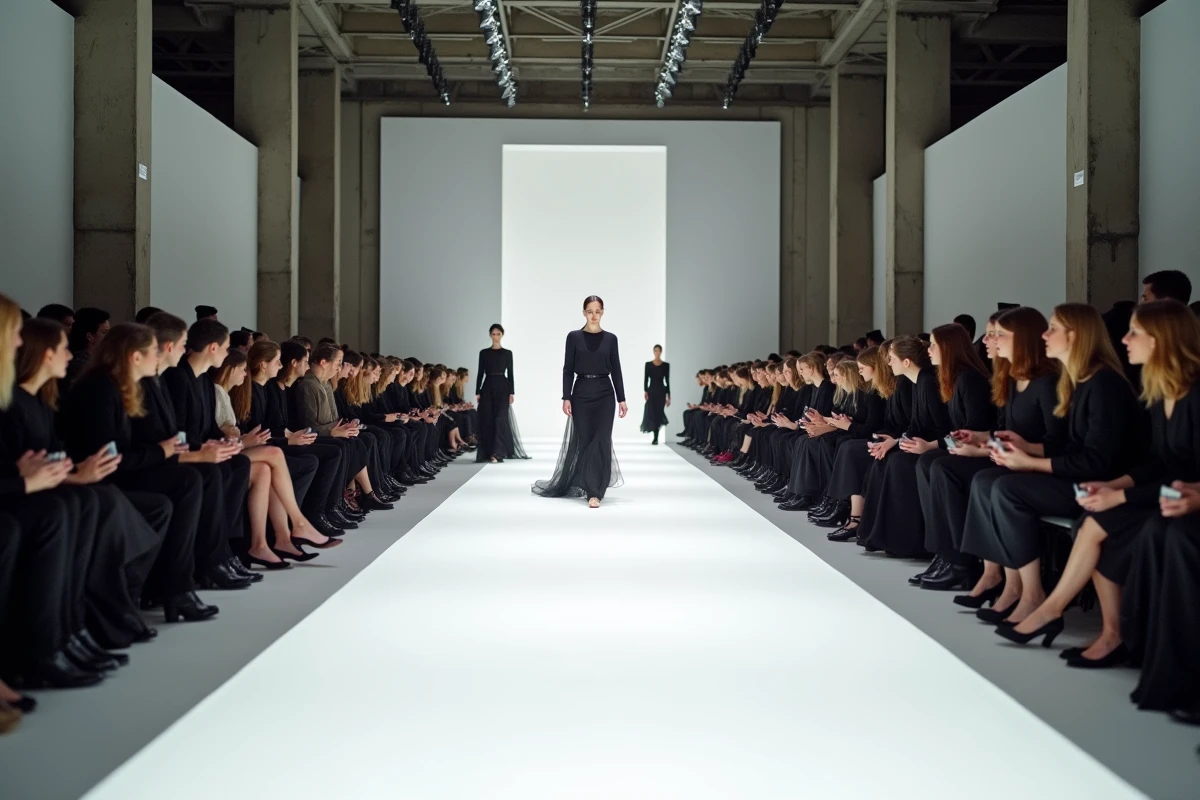
Every year, the major fashion houses participate in not just one fashion week, but several cycles of shows spread across different cities and seasons. The term “fashion week” actually encompasses a much more complex mechanism than a simple annual event. Understanding this calendar is key to grasping how the entire fashion industry operates.
Ready-to-wear, haute couture, men and women: distinct calendars
Let’s take a simple example. When a house like Dior or Chanel prepares its collections, it does not present everything at the same time. There are dedicated windows for women’s ready-to-wear, others for men’s ready-to-wear, and still others reserved for haute couture.
The Fédération de la Haute Couture et de la Mode (FHCM) publishes an official segmented calendar. It includes weeks dedicated to women’s ready-to-wear, men’s ready-to-wear, and specific appointments for haute couture, organized in Paris in January and July.
The result: a major house present in these different segments can show multiple times a year, across several categories. The term “fashion week” refers to several sectoral sequences, not a single event. To delve deeper into this count, one can consult the number of fashion weeks per year according to Fashion Blog, which details the case of Chanel.
How many fashion weeks in the four fashion capitals
Have you ever noticed that the shows follow one another city after city for several weeks? This is because the international circuit follows a specific order. The four historical fashion capitals (New York, London, Milan, Paris) each host their own fashion weeks.
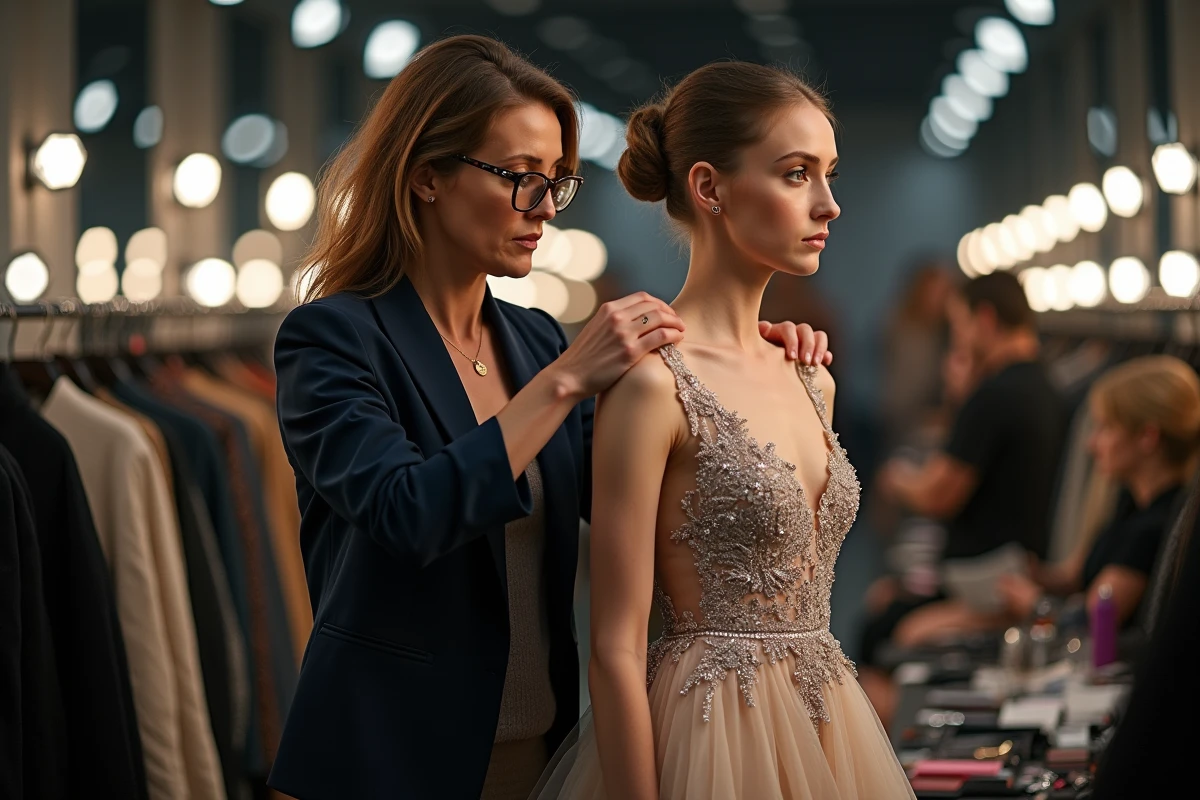
The cycle repeats twice a year for ready-to-wear: a first wave between January and March for the fall-winter collections, a second between June and September for spring-summer. Each wave passes through the four cities, which already accounts for eight weeks of ready-to-wear shows per year, just for the women’s segment.
Add to this the men’s fashion weeks, organized on a staggered schedule, and the haute couture weeks in Paris. The total quickly adds up.
- Women’s ready-to-wear: two sessions per year in each of the four capitals, totaling eight weeks of shows
- Men’s ready-to-wear: two annual sessions, mainly in Paris, Milan, London, and New York
- Haute couture: two appointments per year, exclusively in Paris (January and July)
- Resort and Pre-Fall collections: intermediate presentations, often organized outside the official calendar, in locations chosen by each house
Counting all these sequences, the global circuit totals more than twenty weeks of shows each year.
Resort and Pre-Fall collections: shows outside the official calendar
The two main seasons (fall-winter and spring-summer) are no longer sufficient for the major houses. Intermediate collections, called Resort (or Cruise) and Pre-Fall, have emerged. These presentations do not follow the classic circuit of the four capitals.
Why this choice? The houses seek to supply boutiques year-round. A spring-summer collection presented in September will only be in stores six months later. The Resort and Pre-Fall collections fill this gap by offering pieces available between the two main seasons.
These shows take place in destinations chosen by each brand: a historic city, an iconic location, sometimes another continent. They function as global brand events, designed as much for the press and social media as for professional buyers.
Hybrid formats and the evolution of the fashion calendar
The traditional calendar of fashion weeks has been shaken up in recent years. Major houses have adopted hybrid formats that blend physical shows, intimate presentations, and online content. This evolution, accelerated after the post-Covid period, remains structural in the current organization of collections.

In practical terms, this means that a show in Paris can be accompanied by a digital experience accessible worldwide. Some houses choose to present a collection in video rather than on a traditional runway. Others combine both approaches.
This flexibility has a direct consequence on the number of events. The houses multiply formats without necessarily adding new dates to the official calendar. A digital presentation outside traditional fashion weeks can have as much impact as a Parisian show.
Haute couture, a distinct segment
Haute couture maintains a more limited rhythm than ready-to-wear. Only houses labeled by the FHCM can participate, and the presentation windows remain limited to two per year. This framework contrasts with the multiplication of ready-to-wear events and intermediate collections.
For a house present in haute couture and in men’s and women’s ready-to-wear, the annual count easily reaches six participations in official fashion weeks, not counting Resort collections and special events.
- Haute couture spring-summer: January, in Paris
- Haute couture fall-winter: July, in Paris
- Women’s ready-to-wear: February-March and September-October
- Men’s ready-to-wear: January and June
A house like Chanel or Dior can therefore show six to eight times a year by combining all categories. The number varies according to the brands and their presence in each segment.
The fashion calendar is not limited to four weeks of shows per year. Between the two main seasons, intermediate collections, and hybrid formats, major houses maintain an almost permanent rhythm of presentations. The real question for brands is no longer how many fashion weeks exist, but which ones deserve a physical show, and which can exist in other ways.