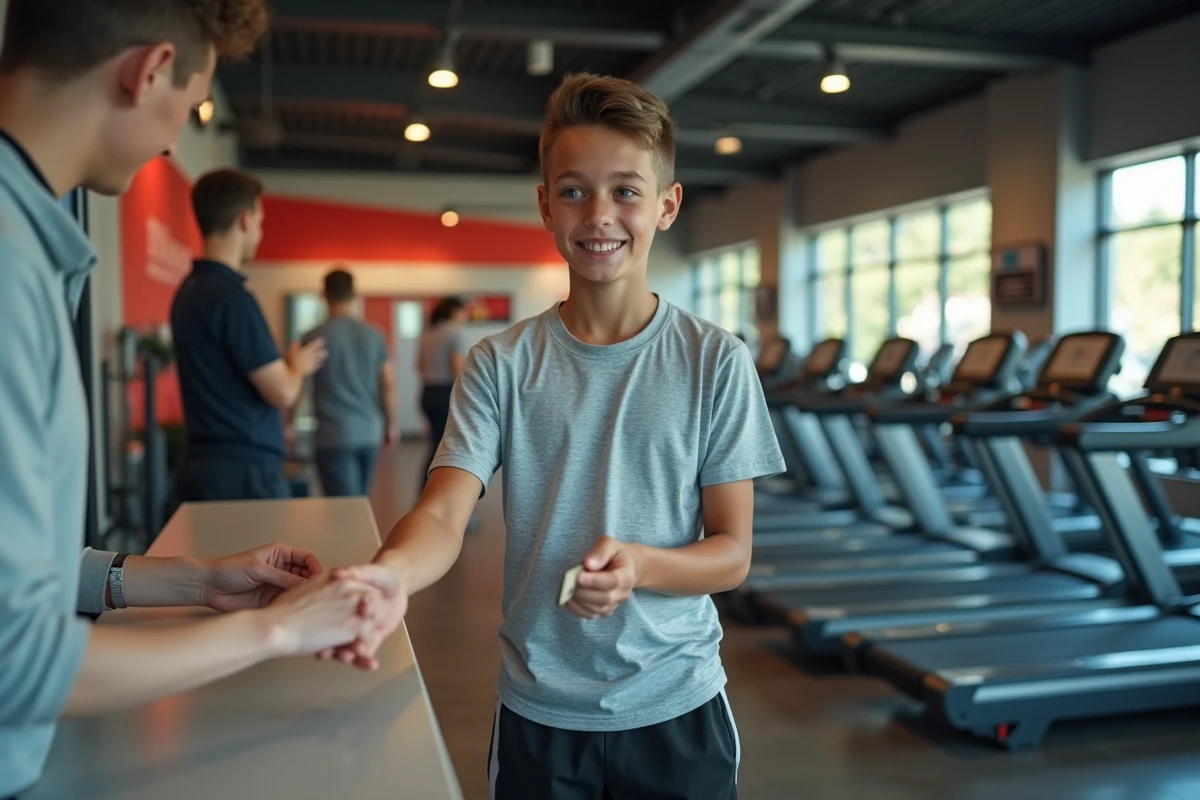
Basic-Fit sets the minimum age for an independent subscription at 16 years. Young people aged 14 and 15 cannot subscribe freely or access weight machines outside of very supervised time slots. This distinction, tightened since 2022, radically changes what a teenager can do (or not) in a Basic-Fit club.
Parental authorization and documents to register at Basic-Fit between 16 and 18 years
A teenager aged 16 or 17 can subscribe to Basic-Fit, but the subscription must go through a legal representative. The parent or guardian signs the subscription and takes financial responsibility for the entire duration of the contract.
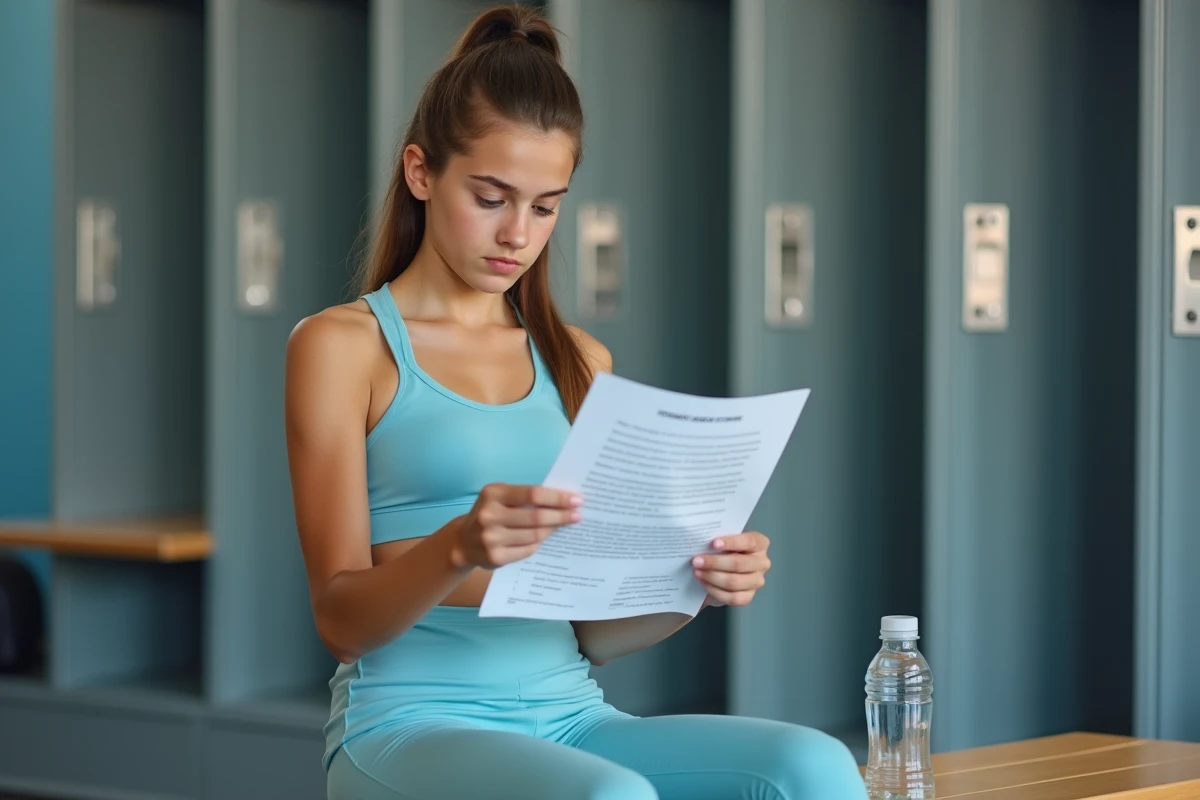
When registering and during the first visit to the club, several documents are required. Document checks have been strengthened in recent years, and an incomplete file blocks access.
- A signed parental authorization from the legal representative, provided on the Basic-Fit form or on plain paper depending on the club.
- The minor’s ID and that of the signing parent.
- A recent proof of residence, sometimes accompanied by a photo ID of the young member.
The signing parent remains the contract holder. They receive the payments, and Basic-Fit contacts them in case of non-payment or cancellation. An article details the subscription conditions for Basic Fit according to age for each age group, allowing verification of the specifics of each situation.
Access to Basic-Fit clubs for 14 and 15 year olds: supervised time slots only
The rule applied since 2022 is clear: a young person aged 14 or 15 cannot freely access Basic-Fit gyms. Weight machines, cardio areas, and independent training are closed to them.
Some clubs offer limited access to supervised group class time slots led by a certified coach. The presence of an accompanying adult is then required for the entire duration of the session.
What this means in practice on a daily basis
A 14-year-old cannot go alone to a Basic-Fit club, scan their badge, and use the equipment. Outside of the scheduled group classes (when the club offers them), the gym remains inaccessible to them.
This restriction is not just a local internal regulation. It stems from a network policy motivated by the desire to reduce risks associated with the use of machines by young people still in a phase of physical growth. The mechanical load exerted by certain weight machines on a developing skeleton raises questions that Basic-Fit prefers to resolve through prohibition rather than individual supervision.
Differences between Basic-Fit plans for a minor subscription
Once the barrier of 16 years is crossed, the young member has access to the same plans as adults. The three levels offered by Basic-Fit (Comfort, Premium, Ultimate) remain identical in content, but their actual use differs according to the teenager’s profile.
The Comfort plan grants access to only one club, the one chosen at registration. For a high school student who frequents the gym near their home or school, this is generally sufficient.
The Premium plan opens access to all Basic-Fit clubs and allows bringing a friend to each session. For a 16 or 17-year-old who often trains with a non-subscribed friend, this option is practically useful. However, the friend must be registered at the reception before entering.
The Ultimate option for a teenager: useful or unnecessary?
The Ultimate plan adds digital services (online programs, training tracking via the app) and benefits like access to live classes. For a teenager starting weight training or fitness, these extras are rarely fully utilized. The additional monthly cost is hard to justify if the young person does not actively use the digital coaching tools.
The choice of the plan remains the responsibility of the signing parent, who can modify or cancel the subscription at any time according to the current contractual conditions.

Parental responsibility and contesting the minor contract at Basic-Fit
The Civil Code distinguishes between routine acts that a minor can perform alone and more binding acts that require the intervention of a legal representative. A gym subscription with recurring monthly payments does not reach consensus on its legal qualification.
Que Choisir has pointed out Basic-Fit’s practice of having minors sign directly as questionable. The consumer association believes that a financial commitment over several months, accompanied by cancellation conditions, exceeds the scope of the routine act that a minor aged 16 or 17 could validate alone.
What to do if a minor signed without parental authorization?
A parent who discovers a subscription taken out by their child without their consent can request the annulment of the contract. The contract of a non-emancipated minor is voidable if the legal representative has not given their consent, provided they act within a reasonable time after discovery.
In practice, Basic-Fit now systematically requests parental signature during club registration. The strengthening of document checks during the first visit aims precisely to avoid these contentious situations, which generate claims and costly reimbursement procedures for both the brand and families.
The question of adolescent access to fitness clubs remains an evolving topic. Clubs regularly adapt their criteria, and the boundary between 14, 16, and 18 years at Basic-Fit reflects a balancing act between the growing demand from young people and precautions related to their physical development and legal status.