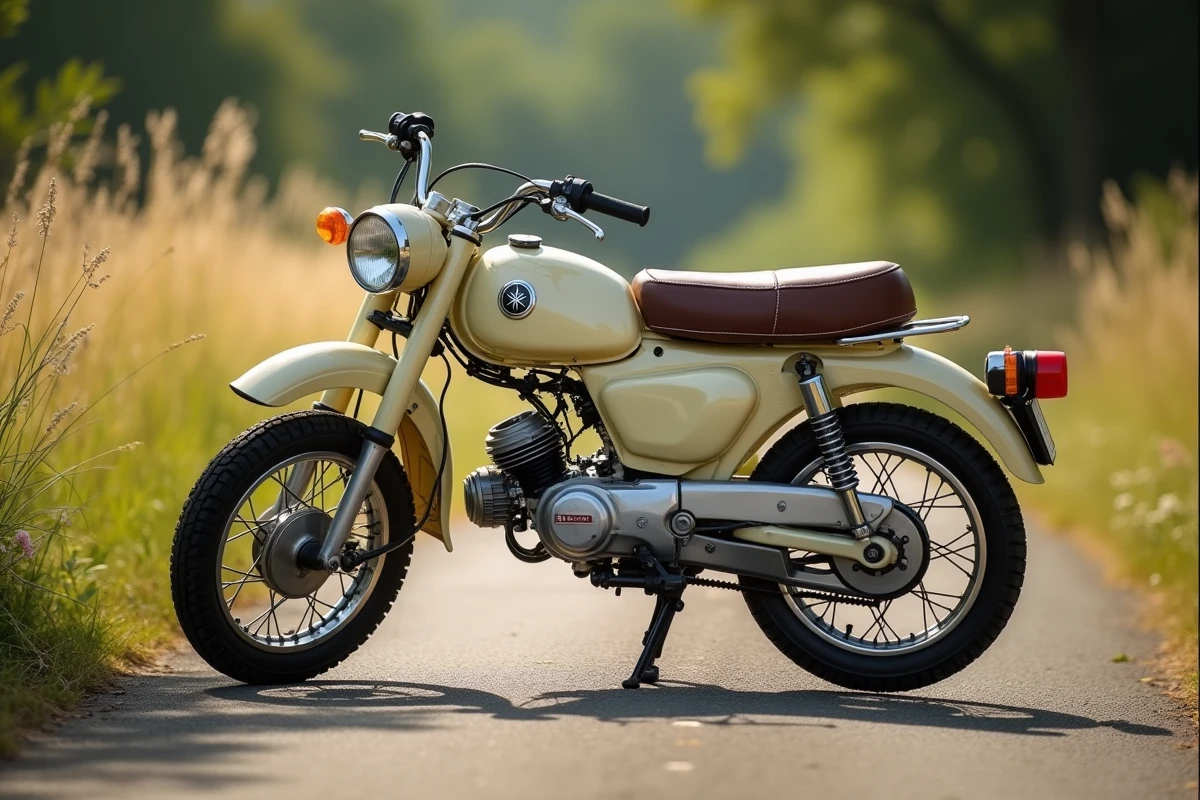
Are you looking for a vintage mini-bike to cruise the back roads on weekends, but you’re torn between the Yamaha Chappy 125 and the Honda Dax? Both machines share a compact size and retro aesthetics, but they ride quite differently. Their mechanics, comfort, and especially their ecosystem of spare parts set them apart more than you might think.
Engine and Road Behavior of the Chappy 125 vs. the Dax
The Chappy was designed by Yamaha as a fun little utility bike. Its two-stroke engine (on the original versions) provides a strong response at low revs, ideal for hill starts or country paths. The 125 version, less common than the 50 and 80, retains this characteristic liveliness while allowing for outings on open roads without being glued to the roadside.
The Honda Dax, on the other hand, relies on a four-stroke engine. The rev-up is more linear and smoother. On a leisurely ride, this difference translates to superior mechanical comfort: less vibration in the handlebars, a more muted sound. However, the original Dax requires more revs to express its power.
On forums, many Dax owners talk about “engine swaps.” This is because the Dax frame easily accommodates modern engines, such as Lifan or Zongshen. This compatibility has created two distinct families of Dax: the collector model, faithful to its original engine, and the “restomod” equipped with a more powerful engine.
The Chappy 125, however, remains almost exclusively in a “full vintage” logic. If you compare the Chappy 125 or the Dax on EpicBuzz, this distinction between collector’s machine and transformable machine becomes clear.
Spare Parts for Yamaha Chappy and Honda Dax: A Decisive Criterion
For a long time, restoring a Chappy was akin to a treasure hunt. Original parts were rare, expensive, and often salvaged from wrecks. This is no longer entirely the case.
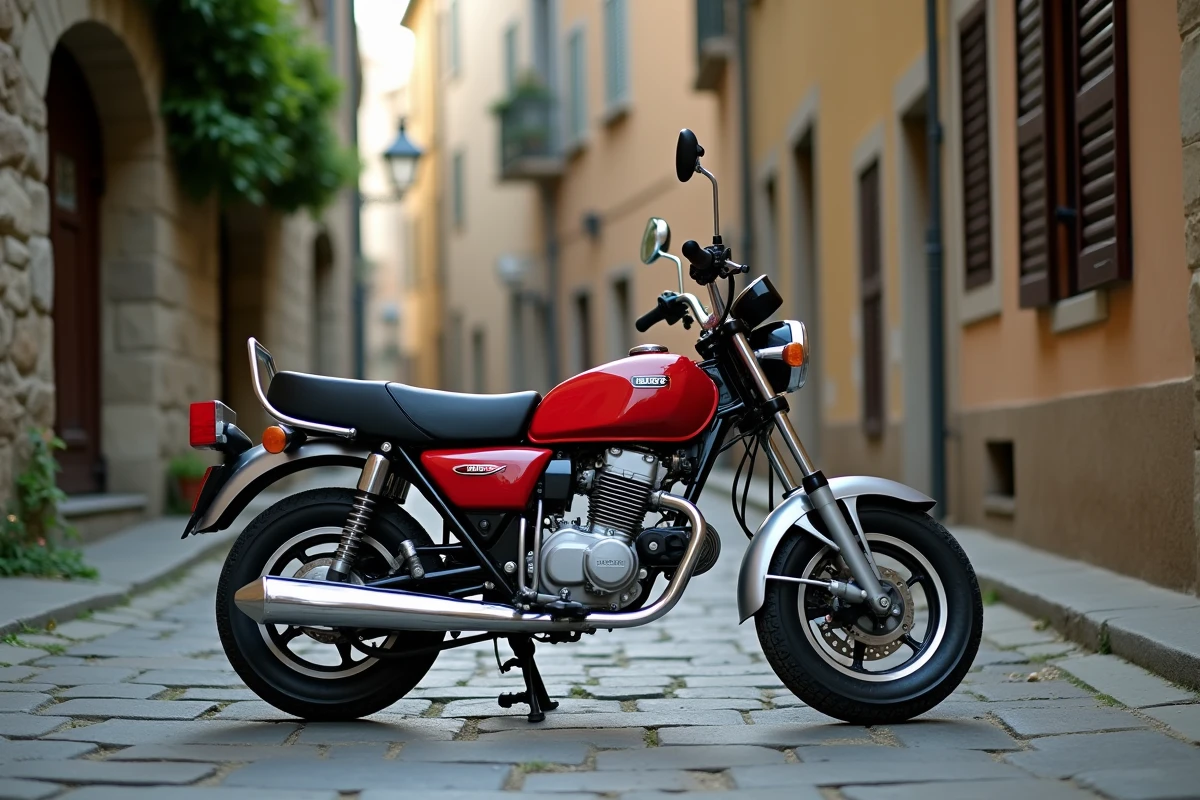
Specialized shops now position themselves as references for spare parts for Yamaha Chappy and Honda Dax, with catalogs mixing original parts and new reproductions. Ignition, brakes, suspensions, consumables: the availability of parts is no longer a major obstacle for the Chappy, although the Dax maintains an edge due to its larger community.
Why this difference in community? The Dax was produced in much larger volumes and over a longer period. The network of enthusiasts, dedicated Facebook groups, and gatherings like Wheels and Waves fuel a vibrant ecosystem. The Chappy, more niche, benefits from a loyal but smaller circle of specialists.
What to Check Before Buying a Used Model
On both machines, the condition of the frame and the original engine dictates everything else. Here are the points to inspect as a priority:
- The ignition: on a two-stroke Chappy, a tired ignition causes misfires when cold. On a four-stroke Dax, check the condition of the spark plug and the charging circuit.
- The drum brakes: common on both models, they lose effectiveness with the wear of the linings. New kits are available, but you need to ensure that the drums are not ovalized.
- The frame’s corrosion: the Dax’s tubes, foldable on the early series, may have play at the hinge. On the Chappy, the area under the seat accumulates moisture.
- The originality of the engine: a Dax with its original Honda engine is worth significantly more than a “swapped” Dax on the collector market. For the Chappy 125, the rarity of the model makes each complete example particularly sought after.
Riding Comfort and Size: Choosing Based on Your Morphology
Both bikes are compact by definition. But they position the rider differently.
The Chappy adopts a slightly more upright position, with forward footpegs. For smaller riders, this is a real advantage: the feet touch the ground effortlessly when stopped. The seat, fairly flat, remains adequate for short trips.
The Dax, with its T-frame and characteristic banana seat, offers an even lower seating position. The legs fold more, which can become uncomfortable after an hour of riding for riders over one meter seventy-five. On a short ride, this “crouched” position is part of the charm. On a longer journey, it tires the knees.

Riding Two-Up on a Vintage Mini-Bike
Neither the Chappy nor the Dax are built for two. The passenger seat, when it exists, remains symbolic. These bikes are primarily solo machines, designed for light rides. If you plan to ride regularly with a passenger, neither will be suitable, and a Suzuki VanVan would be more appropriate for that use.
Chappy 125 or Honda Dax: What Budget to Expect in 2025
The used market for these two models has evolved significantly. Prices depend on three factors: overall condition, originality of parts, and documentation (registration card, period maintenance booklet).
The original Honda Dax, with a French registration card and matching engine, commands high prices on the collector market. Replicas from brands like SkyTeam allow you to find the Dax style at a much lower price, but a replica does not offer the same value or riding pleasure as a period model.
The Chappy 125 remains rarer for sale. This rarity works both ways: prices can rise quickly for a complete example, but it is also possible to find restoration projects at reasonable prices, provided you are willing to dedicate time and source the necessary spare parts.
The choice between these two machines ultimately depends on your relationship with DIY and mechanics. The Dax offers a broader ecosystem, a more active community, and more customization options. The Chappy 125 appeals due to its rarity, two-stroke temperament, and goodwill among enthusiasts. In both cases, a well-maintained example with documented original parts remains the best investment for riding with peace of mind.