
A tech media site that stacks thematic categories (News, Reviews, Guides) without a logical path condemns a significant portion of its evergreen content to invisibility. The structure of the Tech Mafia site illustrates an architectural choice that deserves to be dissected, as it breaks away from the flat hierarchical model that most sites in the industry reproduce by default.
Three-dimensional navigation: theme, format, and depth
Leading tech news sites have migrated in recent years from a purely thematic hierarchy to a three-dimensional navigation grid. The first axis remains the theme (AI, cybersecurity, hardware). The second axis distinguishes the format: brief, long analysis, feature, video, newsletter. The third axis segments the level of depth, from general overview to detailed technical note.
Read also : The baptismal medal: a symbol of faith and family heritage
This approach reduces dependence on hot news. An in-depth feature on transformer architectures is no longer drowned out by the daily stream of briefs. It resides in a dedicated hub where the reader arrives with search intent, not by chronological happenstance.
We observe that consulting the structure of the Tech Mafia site allows us to verify how this logic is concretely materialized in the exposed crawl hierarchy.
Recommended read : Interpretation and Meaning of Animals in Dreams: The Squirrel in Particular
Internal linking driven by intent rather than by category
Classic internal linking connects articles within the same category. It’s a CMS reflex, not an editorial strategy. A properly structured site cross-links according to the reader’s intent: an analysis article on GPUs links to a buying guide, which in turn points to a benchmark comparison.
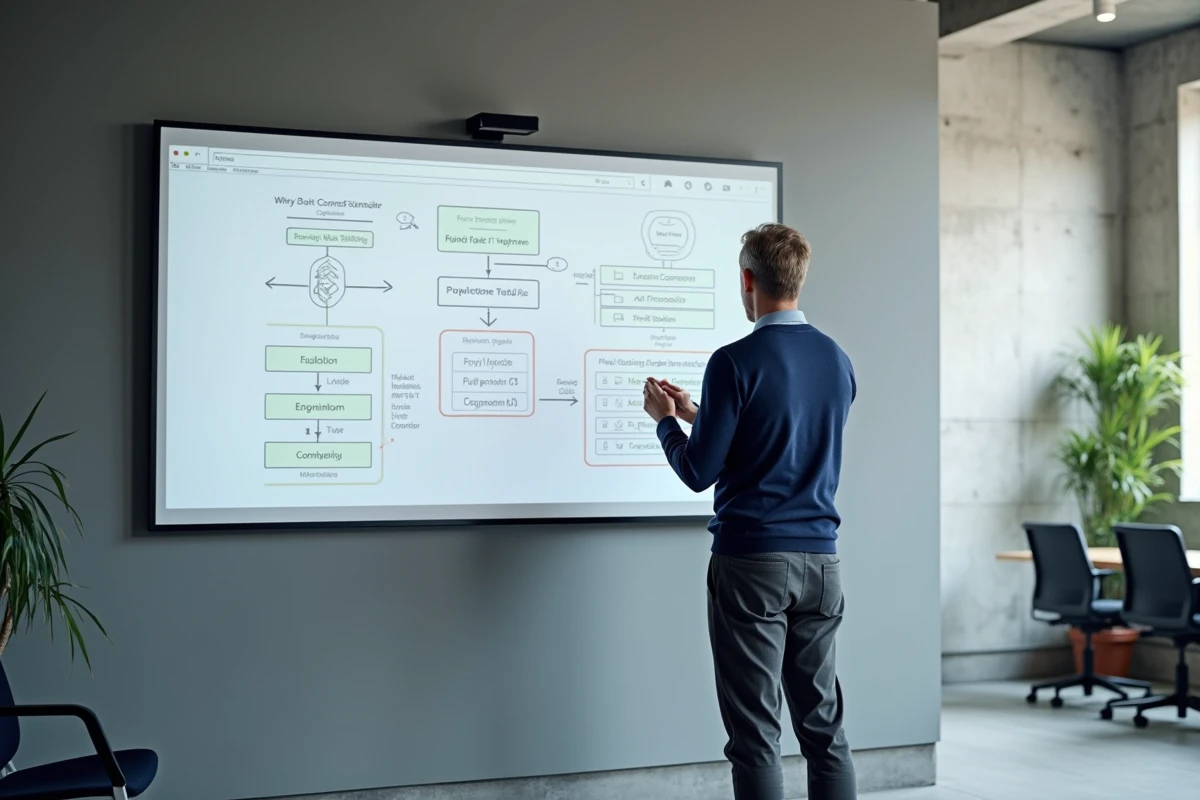
This type of linking produces cross-semantic clusters that signal to search engines a coherent thematic expertise rather than a collection of isolated pages in airtight silos. The benefit is twofold: the crawl budget focuses on high-value pages, and the reader naturally flows through the content without going back through the main menu.
Contextual links versus static navigation blocks
An “Related Articles” block automatically generated by the CMS does not replace an editorial link inserted in the body of the text. The contextual link conveys semantic weight because it appears in a thematically relevant paragraph. Automatic blocks, placed at the end of an article, receive few clicks and transmit a diluted relevance signal.
We recommend limiting automatic blocks to three or four suggestions and focusing the effort on manual linking within the content. It’s more time-consuming editorially, but the gain in session depth is measurable within the first few weeks.
XML Sitemap and dynamic layer: two coexisting structures
The sitemap page of a media site fulfills a role that many webmasters underestimate. It does not just list URLs for Googlebot. It exposes the entire hierarchy in a readable way, allowing for a quick audit of content distribution among thematic nodes.
- The declarative XML sitemap (submitted via Search Console) prioritizes recent URLs and pillar pages by update frequency and priority tag.
- The HTML sitemap page, accessible to visitors, acts as a backup navigation plan and distributes internal PageRank to deep pages rarely linked from the menu.
- The dynamic layer (blocks “For You,” “Continue Reading”) adapts navigation in real-time based on reader behavior, without altering the underlying structure.
These three layers do not replace each other. A well-constructed HTML sitemap compensates for the limitations of the main menu, which can physically expose only a few dozen links. The dynamic layer, on the other hand, optimizes engagement without touching the crawlable architecture.
Frequency of XML sitemap refresh
On a site that publishes daily, the XML sitemap should regenerate at least every hour. An outdated sitemap delays the indexing of fresh content and sends a signal of low activity to the crawler. CMSs like WordPress regenerate the sitemap with each publication if the module is correctly configured, but an aggressive server cache may serve an outdated version for several hours without the editor noticing.

Click depth signals and crawl budget on a tech media site
Click depth, meaning the number of clicks needed from the homepage to reach a given content, directly influences how often Googlebot visits a page. Beyond three clicks, the likelihood of crawling decreases significantly.
On a media site that accumulates several thousand articles, maintaining the entire catalog within three clicks or less from the homepage is an architectural challenge. The solution involves intermediate hub pages, each grouping the content of a thematic cluster and linked from the main menu or footer.
- Thematic hub pages (AI, cloud, security) concentrate the linking and serve as entry points for crawling for each vertical.
- Tags and secondary taxonomies create alternative paths to deep content, provided they do not generate nearly empty pages (fewer than five articles per tag).
- Archive pagination, if poorly managed (noindex on pages 2+), cuts crawler access to older content.
A regular audit of click depth using a crawl tool (Screaming Frog, Sitebulb) remains the most reliable way to detect orphaned content. Any page more than four clicks deep deserves a direct link from a hub or a recent article.
The structure of a tech media site is not a fixed diagram drawn once at the project’s inception. It recalibrates at each editorial volume milestone, when taxonomies saturate or when user journeys reveal dead ends. An auditable sitemap and a theme-format-depth grid constitute the most solid technical foundation to absorb this growth without losing crawlability or readability.