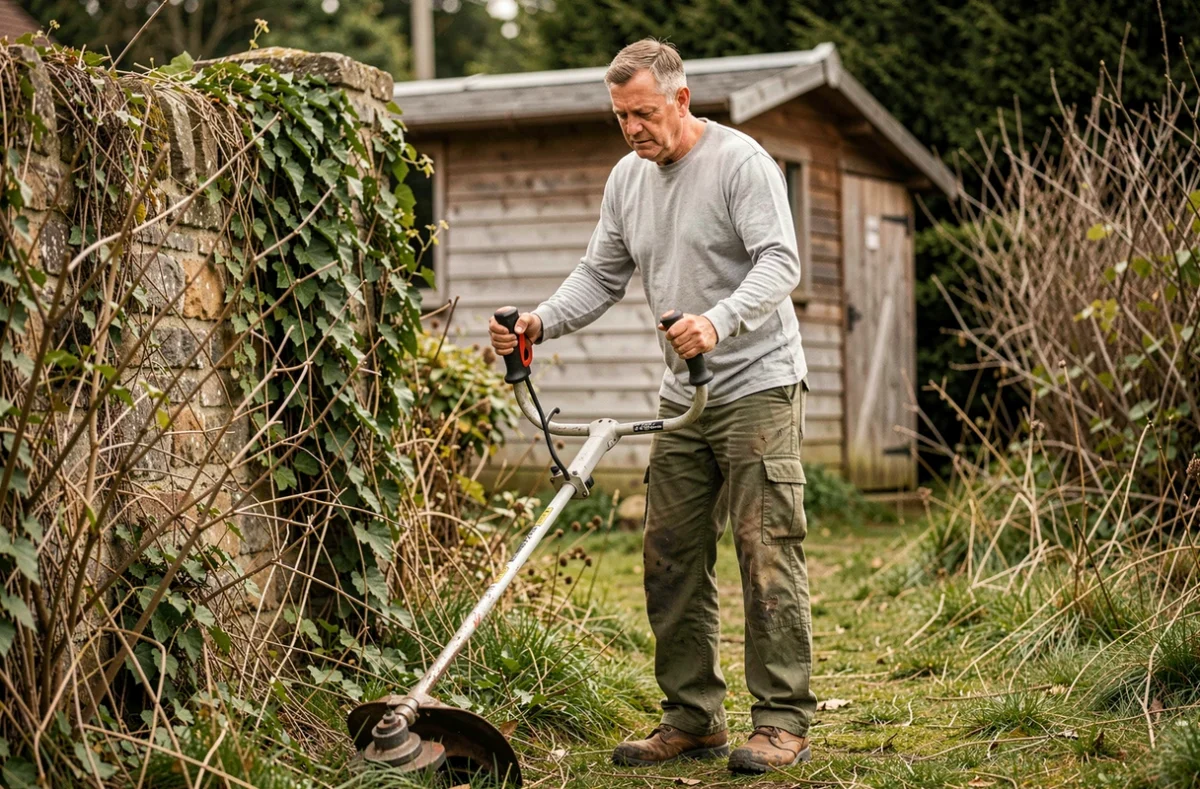
A sloping plot where brambles spread a little further each week, a patch left overgrown after winter, a bank the lawn mower can’t reach: it’s often situations like these that make you realize you need a brush cutter. Choosing the right model depends less on the brand than on what you actually expect the machine to do on your land.
Petrol or electric brush cutter: your terrain makes the choice for you
For a modest-sized plot near a power outlet or shed, a corded electric brush cutter is enough to cut tall grass along a fence. It’s lightweight and quiet, and requires virtually no engine maintenance.
As soon as the area exceeds a few hundred square metres, or the vegetation includes brambles, woody regrowth or dense scrub, a petrol engine remains the practical choice. Its power lets it maintain a steady speed even in tough vegetation, without the risk of overheating.
Battery-powered models occupy a middle ground. They’re popular in urban and suburban gardens where noise is a concern. Their runtime is improving, but varies considerably depending on the density of the vegetation being cut: you’ll get longer on soft grass than on dry or semi-woody stems. To compare the available ranges and narrow down your options based on how you plan to use the machine, you can check the detailed product guides at ma-debroussailleuse.com before heading to the store.
Engine power and displacement: match the machine to the vegetation
A brush cutter’s power is measured in watts (electric) or engine displacement (petrol). On paper, a higher figure always seems better. In practice, an oversized engine makes the machine heavier and tires the user out during long sessions.
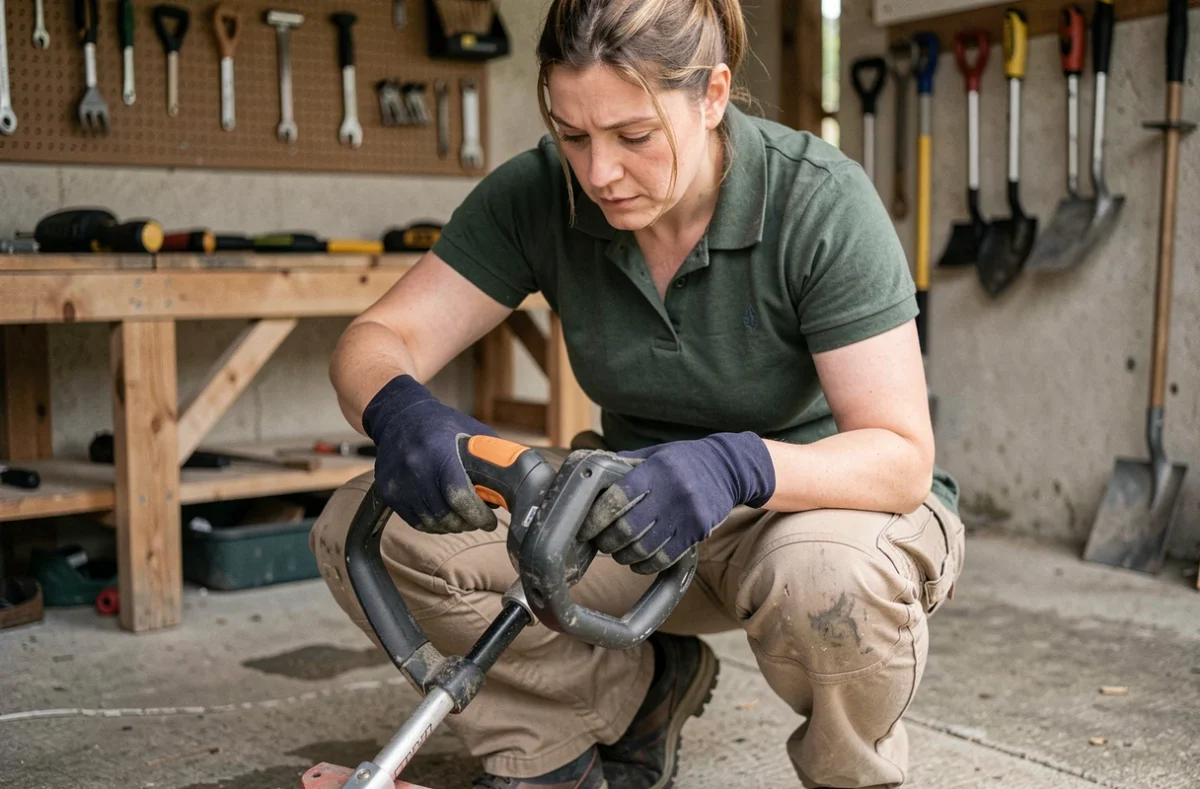
For tall grass and a few weeds, a moderate engine displacement is suitable. It lets you work without straining the machine and uses less fuel. By contrast, land overrun with brambles, gorse or woody shoots calls for an engine that can maintain its torque at low speeds, which points to mid-range or professional models.
The deciding factor isn’t the advertised maximum power, but the engine’s ability to keep running in dense vegetation. This is difficult to assess from a product listing. Feedback from users working on the same type of terrain as yours is often more useful than a technical specification.
Blade, nylon line or disc: choose the cutting head for the job
This is something many gardeners overlook when buying a brush cutter. Yet the cutting head determines what you can actually do with the machine.
- Nylon line is suitable for routine maintenance: tall grass, edges and finishing around obstacles. It wears quickly in tough vegetation, but is easy to replace and won’t risk throwing dangerous debris near a wall or fence.
- A grass blade (with three or four teeth) cuts thick grass and semi-woody stems. It delivers a clean cut and puts less strain on the engine over larger areas.
- A bramble or brush disc, with its many teeth, tackles bramble patches, young tree shoots and woody vegetation. It requires enhanced protective gear (a face shield and leg guards) and a machine powerful enough to spin it without jolting.
Check that the cutting head is compatible with the brush cutter model before buying to avoid surprises. Not all drive shafts can handle a heavy disc, and fitting a blade to a model that’s too lightweight puts excessive strain on the engine.
Ergonomics and harnesses: what makes a difference during a half-day’s work
In the store, you weigh up the machine for thirty seconds. Out in the field, you carry it for an hour or more. The difference between a well-balanced model and one with a poorly fitted harness shows up as lower back pain and reduced efficiency.
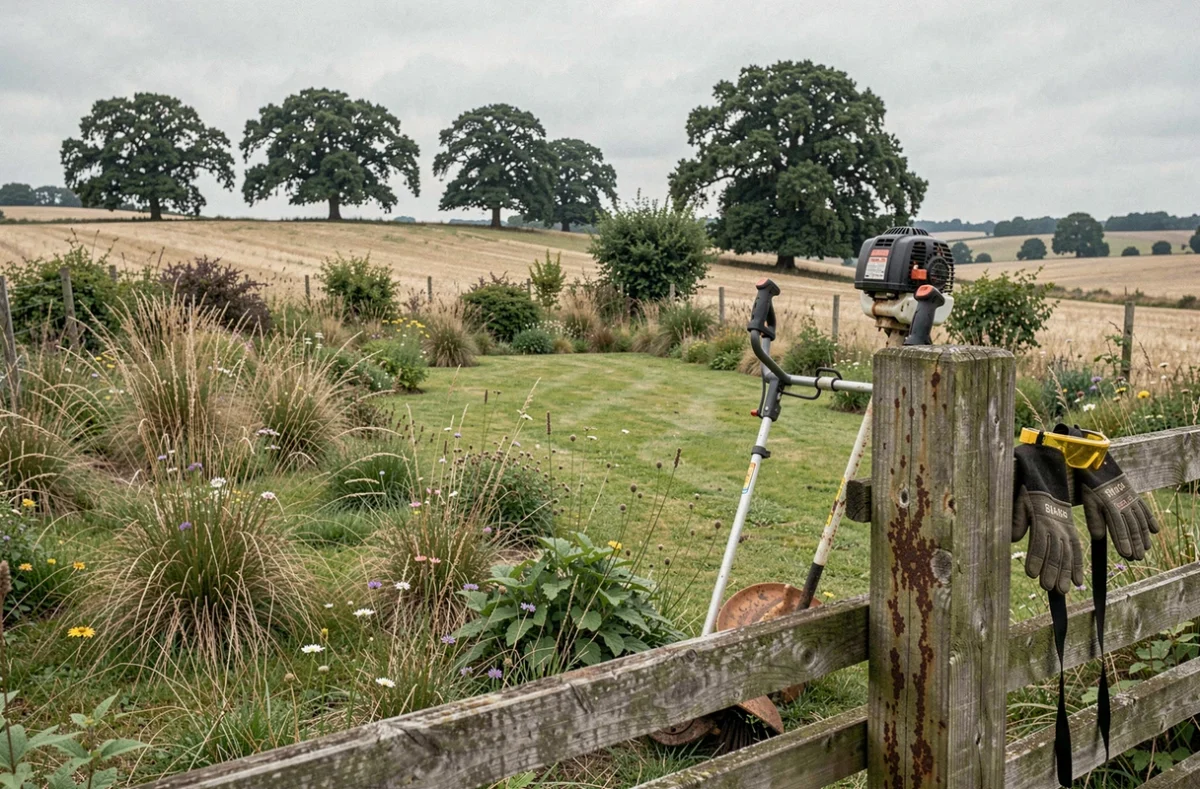
Harness-mounted brush cutters (with a single or double harness) suit most gardens. A double-shoulder harness with lumbar support distributes the weight more evenly and reduces fatigue during long sessions. For large areas or sloping terrain, a backpack model transfers the weight to your hips and frees up your arms, significantly reducing the effort needed to guide the machine.
The handle type matters too. A bicycle-style handlebar offers good lateral control on flat ground. A loop handle is more compact and makes it easier to work in cluttered or sloping areas where you constantly need to change the cutting angle.
Legal brush-clearing requirements and noise restrictions
Before choosing a brush cutter, find out whether clearing vegetation is a legal requirement or simply optional maintenance. In areas at risk of wildfires, local regulations may require property owners to reduce vegetation around their homes, with fines for non-compliance. Requirements (clearance area, cutting height and frequency) vary by municipality, so check with your local council or prefecture to find out which rules apply.
The timing of the work also matters. Authorities recommend carrying out work on shrubs in autumn or winter, when it is less likely to disturb wildlife and plants during the breeding season.
As for noise, the hours when garden machinery can be used are governed by local or prefectural regulations. In a densely populated residential area, using a petrol model at the weekend may be problematic. This is a practical consideration that leads some users to choose a battery-powered machine, even if it means accepting a shorter runtime.
Cuttings should not be left in piles on site, especially in areas subject to mandatory brush clearing. Planning how to dispose of them (at a waste facility, by shredding or composting, depending on the type of waste) is part of preparing the job, just like choosing the machine.
The right brush cutter is rarely chosen from a catalogue alone. Start with your terrain, the vegetation, how often you plan to work on it and any local restrictions. A machine suited to these practical factors will last longer and make every maintenance session far less of a chore than a model chosen solely on price or advertised power.