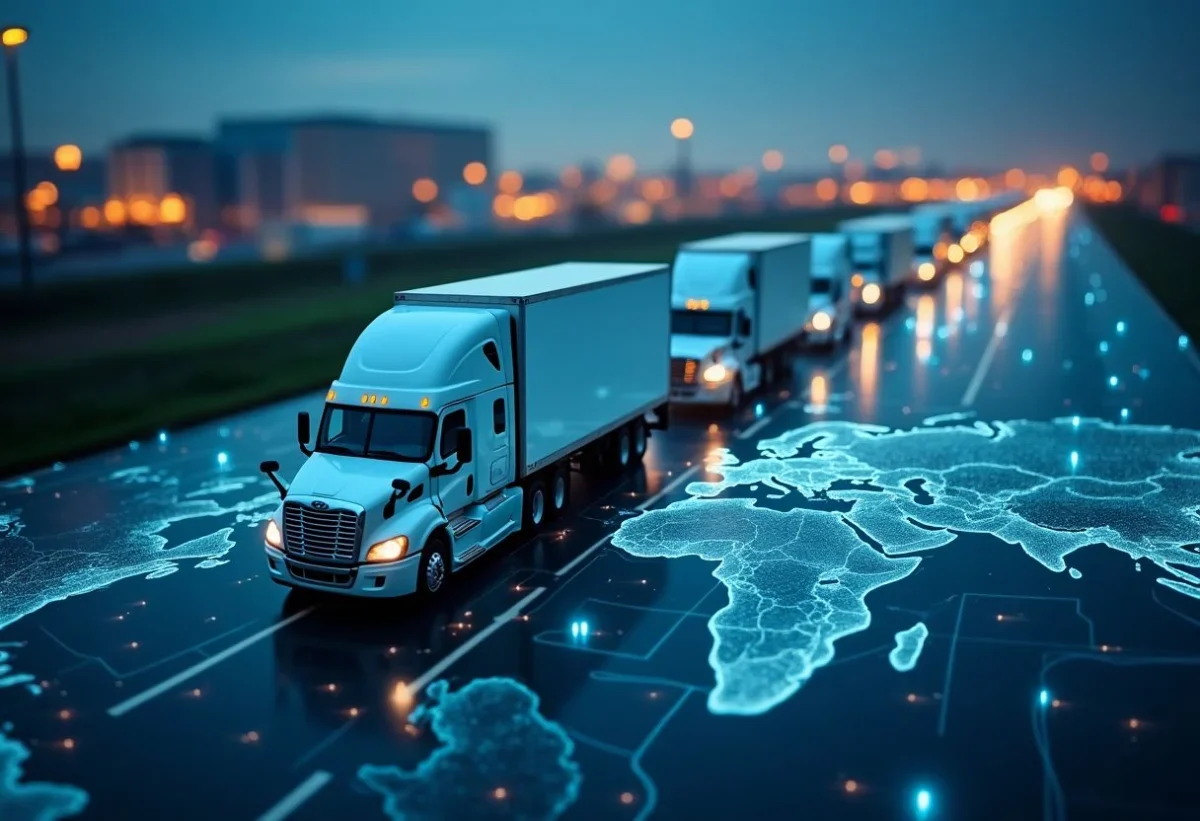
In the modern business world, effective resource management has become an absolute necessity to ensure profitability and competitiveness. For companies that rely on vehicles for their daily operations, effective fleet tracking proves to be an indispensable tool. It not only provides the ability to know the exact location of each vehicle but also optimizes routes, reduces costs, and improves customer service. Technological advancements have transformed what was once a tedious task into a simple formality thanks to innovative and intuitive solutions. Adopting an efficient tracking system can radically change the way a company manages its fleet, bringing transparency and efficiency.
The Strategic Advantages of Fleet Tracking
A modern fleet tracking system offers tangible benefits for companies looking to improve their logistics. It goes beyond simple location tracking and encompasses a multitude of functions that transform vehicle management.
- Firstly, reducing operating costs is among the most immediate benefits. By optimizing routes and ensuring that drivers follow the most efficient paths, significant fuel savings can be achieved.
- Secondly, the safety of drivers and vehicles is greatly enhanced through real-time monitoring. Companies can respond quickly in case of issues, thereby reducing the risk of loss or theft.
- Thirdly, customer service is also strengthened. Customers can be accurately informed of delivery times, which improves their satisfaction and builds trust in your company.
- Finally, valuable data on vehicle usage is continuously collected, allowing for the identification of improvement opportunities and ensuring predictive maintenance, thus extending the lifespan of assets.
The Essential Components of Tracking Systems
To fully leverage the benefits offered by a fleet tracking system, it is imperative to understand its key components. Each plays a crucial role in optimizing your fleet.
- GPS Technology: The heart of any tracking system, it allows for real-time location of each vehicle, providing accurate data on their position.
- Communication Tools: They enable quick interaction between the office and drivers, facilitating the transmission of essential information.
- Analytical Software: They collect and analyze data to provide detailed reports on vehicle and driver performance.
By combining these elements, companies can gain an overview of their fleet, identifying inefficiencies and areas requiring special attention.
How to Choose the Right System for Your Needs
Selecting the right fleet tracking system requires a thorough analysis of your company’s specific needs. Each organization has different priorities, and it is essential to evaluate the available options to make an informed choice.
To start, identify the essential features you need. Whether it’s to optimize routes, track driver performance, or ensure vehicle maintenance, each company will have its own requirements.
Next, assess the ease of use of the system. A complex and difficult-to-use tool can deter your teams from fully adopting it. Opt for an intuitive interface that simplifies the process.
Finally, consider the scalability of the system. Ensure that it can evolve with your business and adapt to a growing fleet without requiring major or costly changes.
The Challenges of Fleet Tracking and How to Overcome Them
Despite the many advantages, implementing a fleet tracking system can pose certain challenges. It is crucial to anticipate them to manage them better.
- Resistance to Change: Drivers may be reluctant to the idea of being constantly monitored. To overcome this, it is important to communicate the benefits of the system not only for the company but also for them, such as improved safety.
- Initial Investment: The cost can be a barrier for some companies. However, considering the long-term savings, the investment often proves to be worthwhile.
- Integration with Existing Systems: Ensure compatibility with your current tools to avoid unnecessary technical complications.