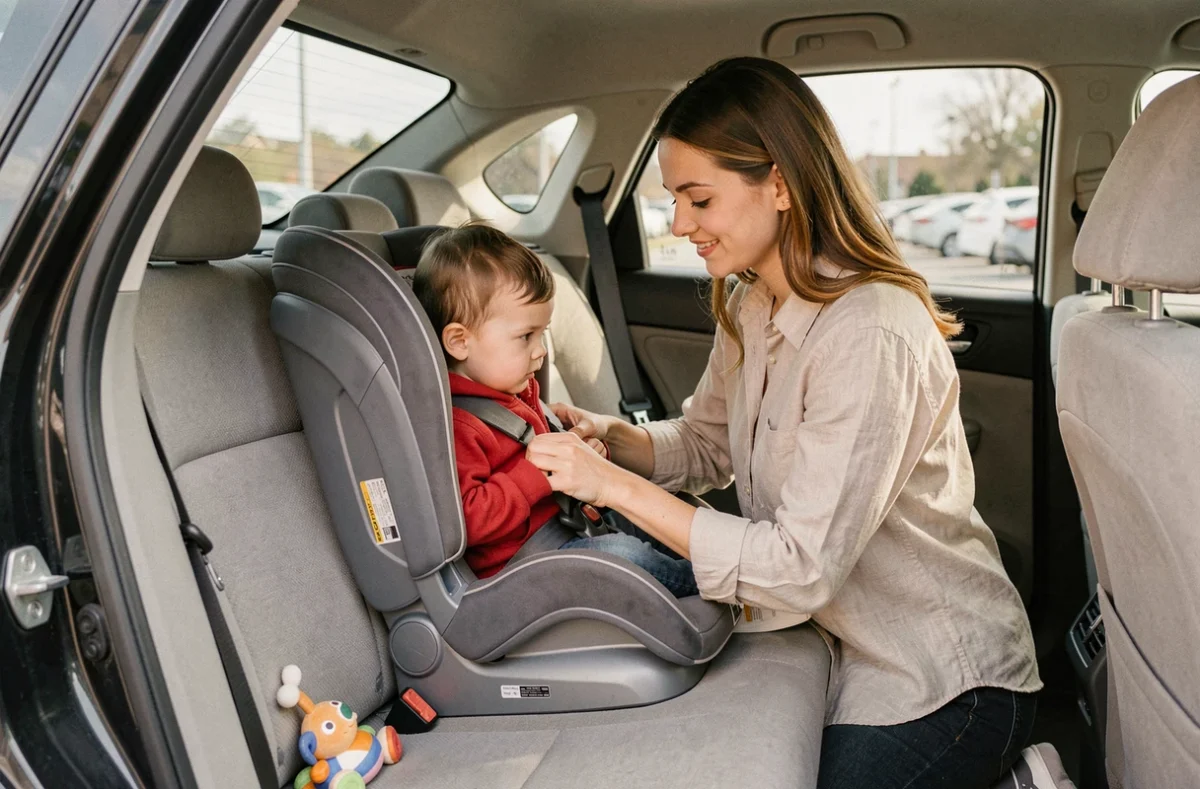
A R129 certified seat does not automatically provide adequate protection. Certification sets a regulatory baseline, but performance discrepancies between two seats bearing the same i-Size marking can be significant once independent ADAC or TCS test results are examined. We focus this comparison on the criteria that truly differentiate a safe seat from one that is merely compliant.
Discrepancy between R129 certification and independent crash test results
UN R129 certification validates minimum thresholds for frontal and lateral impact resistance. Independent laboratories like ADAC go further: they measure decelerations on the dummy’s chest and head in more severe collision configurations, assess the presence of harmful substances in the fabrics, and test installation ergonomics.
Thus, two i-Size seats sold at the same price can receive very different ratings based on these additional criteria. A model that is “compliant” with the regulation may prove to be mediocre in actual lateral protection or ease of harness adjustment. We recommend always cross-referencing certification with ADAC or TCS results before making a purchase.
To delve deeper into this approach, Maman Anonyme’s safety reviews detail the rating discrepancies between popular models on the French market.
End of R44 seat sales: what this changes concretely
As of September 1, 2024, R44 certified seats are banned from sale in the European Union. Their use remains legal if you already own one, but no retailer can sell new ones.
This distinction between “marketable” and “usable” creates frequent confusion. An R44 seat purchased before this date can still legally transport your child. However, it does not benefit from the enhanced requirements of R129 regarding lateral impact protection, nor from size classification (in centimeters) rather than weight.
If your R44 seat is several years old, the aging of the absorbent foams and straps justifies replacing it with a recent R129 model, regardless of legal obligation.
Car seat installation: the underestimated risk factor
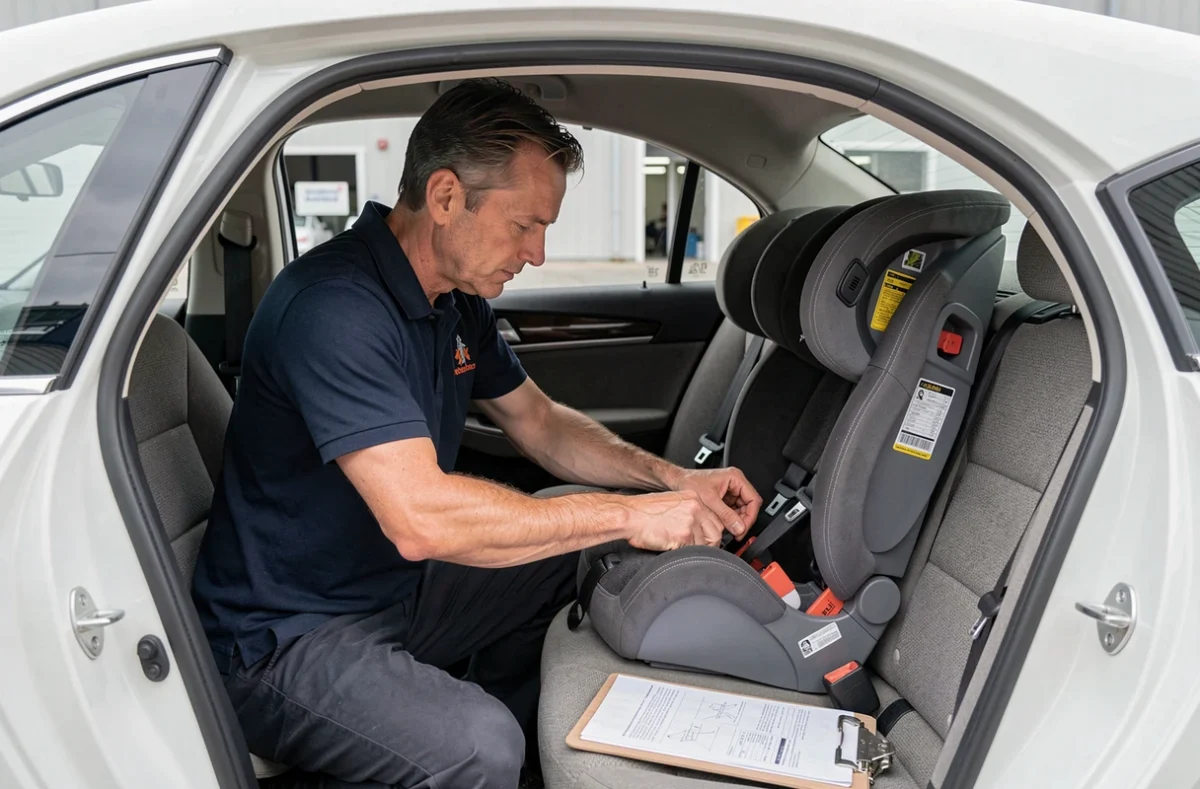
A poorly installed seat offers less protection than a lower model that is properly secured. Independent tests evaluate ease of handling precisely for this reason: a complex installation system increases the risk of error in daily use.
The critical points to check on every trip:
- The lateral play of the seat on the bench: once secured in Isofix, the seat should not move more than one centimeter in any direction. Excessive play reduces the effectiveness of lateral impact protection.
- The harness tension: you should not be able to pinch the fabric of the strap at the child’s collarbone. A harness that is too loose allows the body to slip under the straps during a sudden deceleration.
- The height of the headrest: the top of the child’s head should not exceed the upper edge of the shell. If it does, the seat has become too small, regardless of the displayed weight limit.
- The seat belt routing (for boosters): the lap belt should lie over the pelvic bones, never on the stomach. The diagonal should cross the shoulder without touching the neck.
An Isofix seat with visual locking indicators (green/red light on the connectors) significantly reduces the installation error rate compared to a seatbelt-only system.
Vehicle compatibility and space constraints
The theoretical performance of a seat is worthless if it does not fit your car. Space on the back bench often determines the final choice, especially for families with multiple children or those driving a compact car.
A rotating seat makes it easier to install the child but takes up more longitudinal space. In a compact vehicle, the front passenger may be forced to move their seat back to the minimum. Before purchasing, measure the available depth between the back of the front seat (in normal use position) and the back bench.
For configurations with three children on the bench, the overall width of the seat becomes the discriminating criterion. Some i-Size models feature a reduced width specifically designed for this situation. Also, check that your vehicle’s Isofix anchor points are compatible with the targeted seat: the list of compatible vehicles is found in the manufacturer’s manual and sometimes on their website.
Rear-facing position: how long to extend
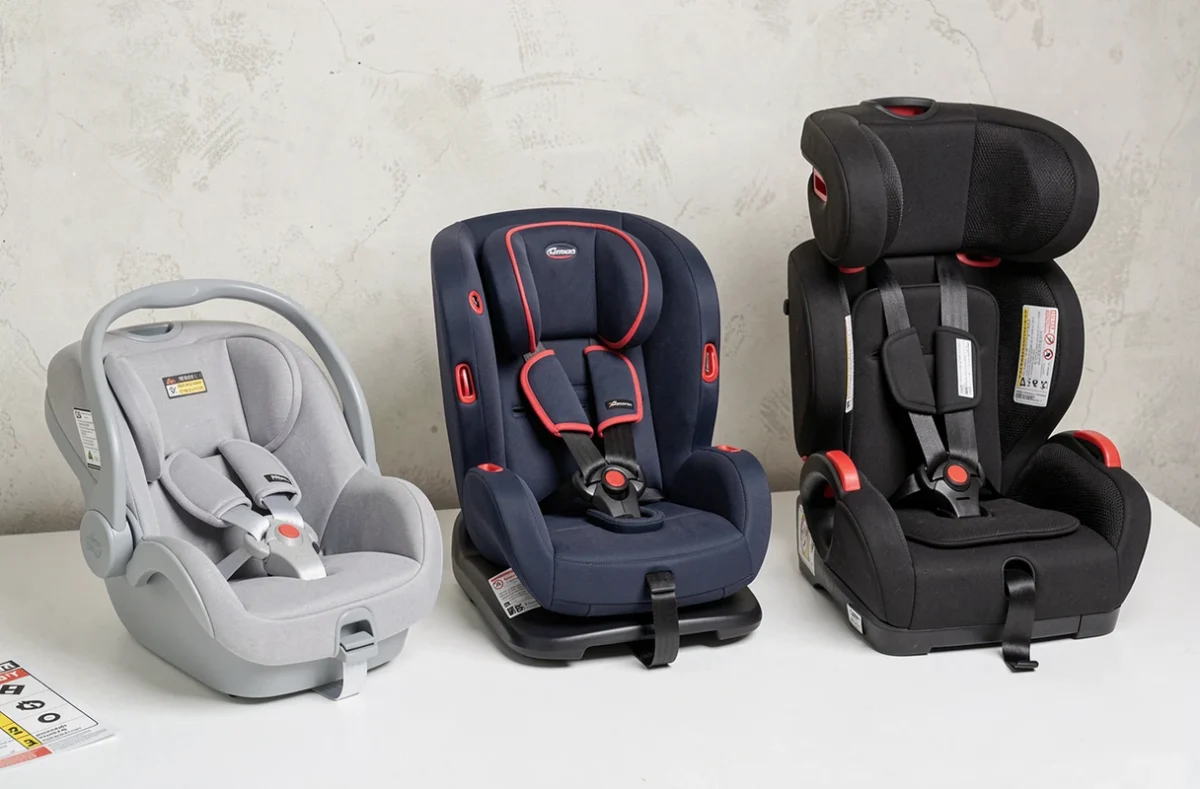
Rear-facing models offer significantly superior protection in frontal impacts, which remain the most frequent and violent type of accident. R129 regulations require this position until at least 15 months, but road safety specialists recommend maintaining it for as long as possible.
Some seats allow rear-facing travel up to 105 cm or even more. The child’s comfort in this position largely depends on legroom and seat recline. A child who bends their knees against the back of the bench is not in danger: in the event of a frontal collision, it is the cervical vertebrae that bear the critical stress, not the legs.
Transitioning to a forward-facing position is often motivated by perceived comfort or the child’s complaints. Biomechanically, each additional month spent rear-facing strengthens the protection of the neck and spine, whose ossification is not complete in young children.
The choice of a car seat relies less on brand or price than on three concrete parameters: the rating in independent tests, actual compatibility with your vehicle, and ease of installation that affects daily use. A well-rated model that is consistently poorly strapped loses all its advantages. Take the time to handle the seat in-store before purchase, including the harness and Isofix.