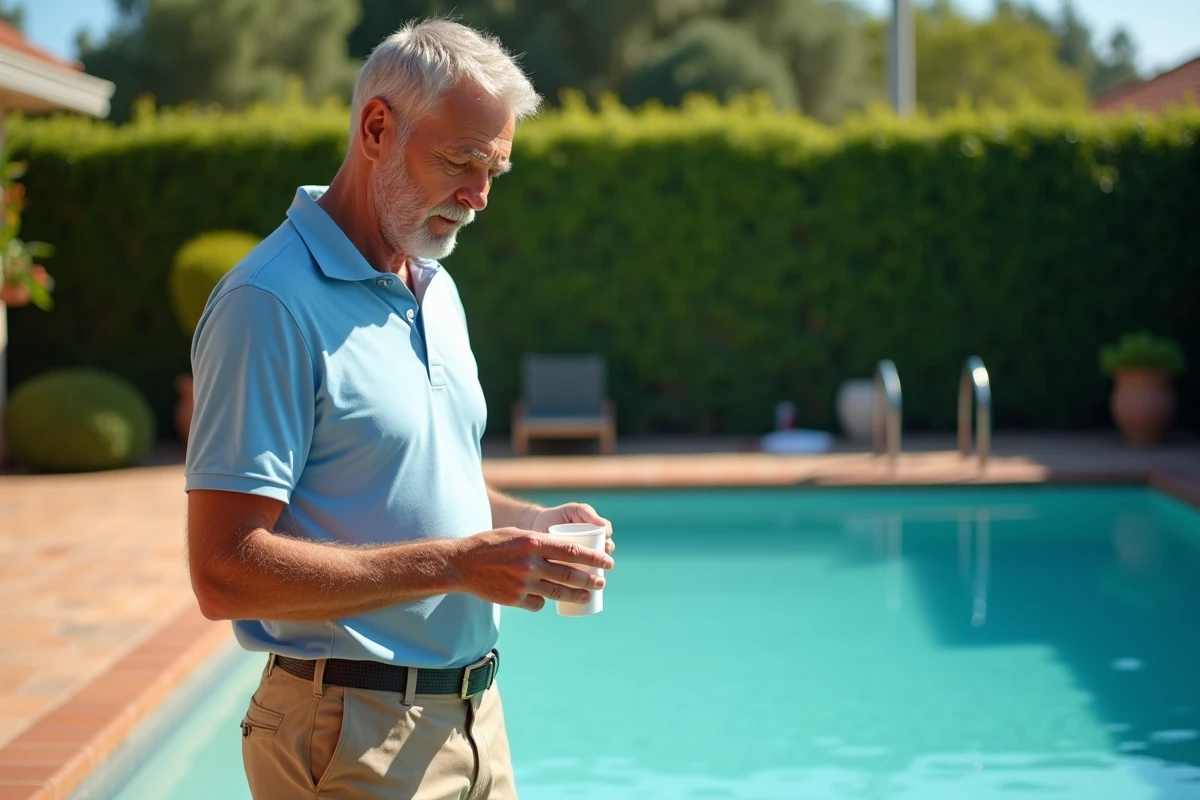
Free chlorine only disinfects effectively at low pH. At 7.2, almost all of the chlorine is in the form of hypochlorous acid, the only truly bactericidal molecule. As soon as the pH rises above 7.6, this proportion drops and the disinfecting power collapses. Adding a clarifier to poorly balanced water is like masking a problem without solving it.
Over-stabilization with cyanuric acid: the trap that neutralizes chlorine and clarifier
Stabilized chlorine tablets (trichlor) release cyanuric acid with each dissolution. This stabilizer protects chlorine from UV rays, but it accumulates in the water without degrading naturally. Beyond a certain concentration, cyanuric acid blocks the action of free chlorine, even if the total chlorine level appears correct on the test strip.
We regularly observe pools treated for several seasons with stabilized tablets where the water remains cloudy despite repeated doses of clarifier. The problem is not the clarifier; it’s the chlorine that no longer disinfects. The water contains unoxidized organic matter that the clarifier clumps together without the filtration being able to remove it properly.
The only reliable solution: measure the stabilizer level before any intervention. If the concentration is too high, a portion of the water volume must be replaced. No chemical product degrades cyanuric acid in the pool. For the shock treatment that follows, we recommend calcium hypochlorite (unstabilized shock chlorine) to avoid worsening the problem. You can use clarifier and chlorine with Maison Future Co to delve deeper into the treatment sequence suitable for each situation.
Shock chlorine followed by pool clarifier: order and timing
The order of application changes everything. A clarifier poured before shock chlorine will be partially destroyed by massive oxidation. Shock chlorine applied to already clarified water can resuspend clumped particles. The correct sequence follows a strict technical logic.
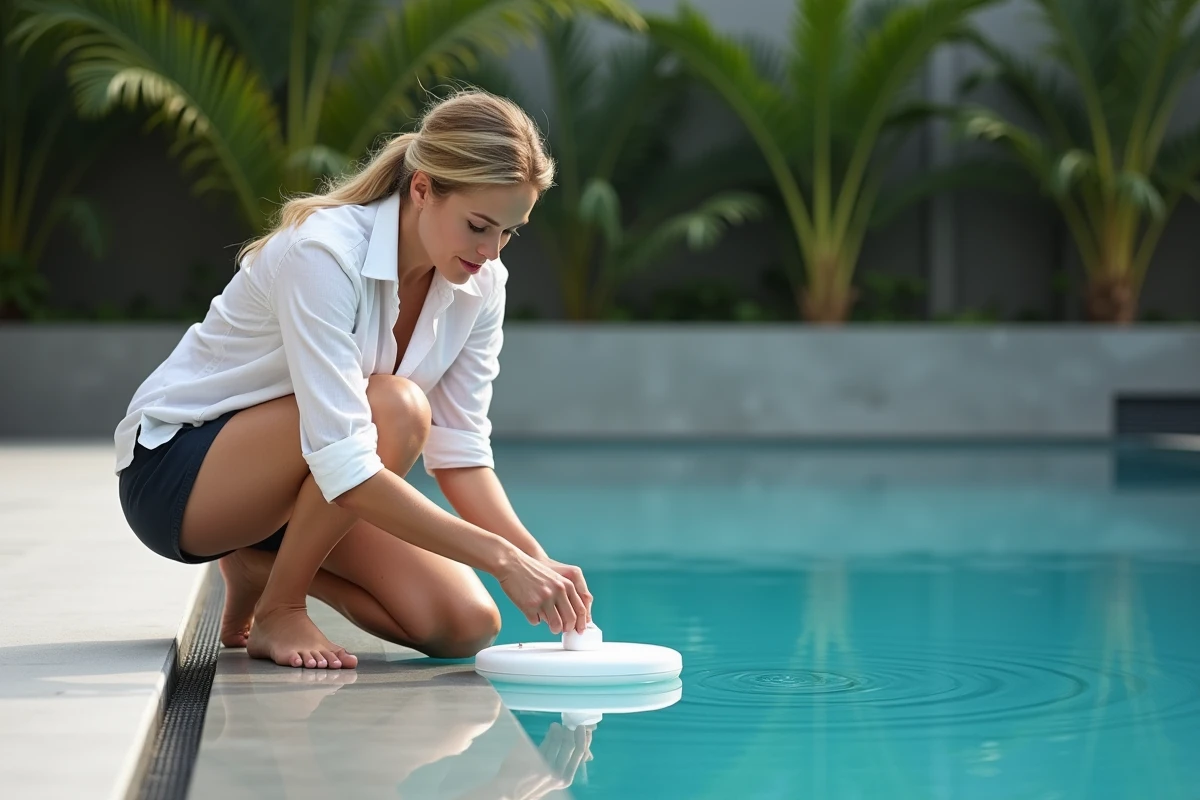
Step 1: balance the pH before the shock
Adjust the pH between 7.0 and 7.4. This is the range where shock chlorine reaches its maximum effectiveness. A pH of 7.8 significantly divides the disinfecting power. This step takes a few hours for the pH corrector to diffuse.
Step 2: unstabilized shock chlorine and marathon filtration
Pour the shock chlorine (calcium hypochlorite or unstabilized dichlor) directly into the pool, with the pump running. Then start a continuous filtration 24/7 as long as the water remains cloudy. This marathon filtration phase is the most neglected. Stopping filtration at night after a shock means allowing suspended matter to settle everywhere.
During this phase, the filter works at full capacity. A backwash every twelve hours or so helps maintain flow. Chlorine oxidizes organic matter, and filtration removes the residues. As long as the water has not become translucent again, the clarifier has no place.
Step 3: clarifier once the residual chlorine is stabilized
When the free chlorine level drops to a normal level and the water is translucent but still slightly cloudy, it’s time for the clarifier. The residual microparticles, too fine for the filter media, are then clumped into aggregates that can be captured by the filter.
- Pour the liquid clarifier in front of the return jets, with filtration running, to ensure even distribution in the water volume.
- Maintain continuous filtration for the next 24 to 48 hours without interruption.
- Do not swim during the clarification phase to avoid resuspending particles.
- Perform a backwash of the filter once the water has become clear again to remove the retained aggregates.
Clarifier or flocculant for pools: choose according to the type of filter
The clarifier and flocculant do not work the same way, and especially, the flocculant is incompatible with a cartridge filter. The flocculant forms heavy clumps that fall to the bottom of the pool. They must then be vacuumed manually, in “drain” mode, without going through the filter. Used with a cartridge filter, it irreversibly clogs the membrane.
The clarifier, on the other hand, produces lighter aggregates that remain suspended long enough to be captured by filtration. It works with all types of filters (sand, glass, cartridge, diatomaceous earth).
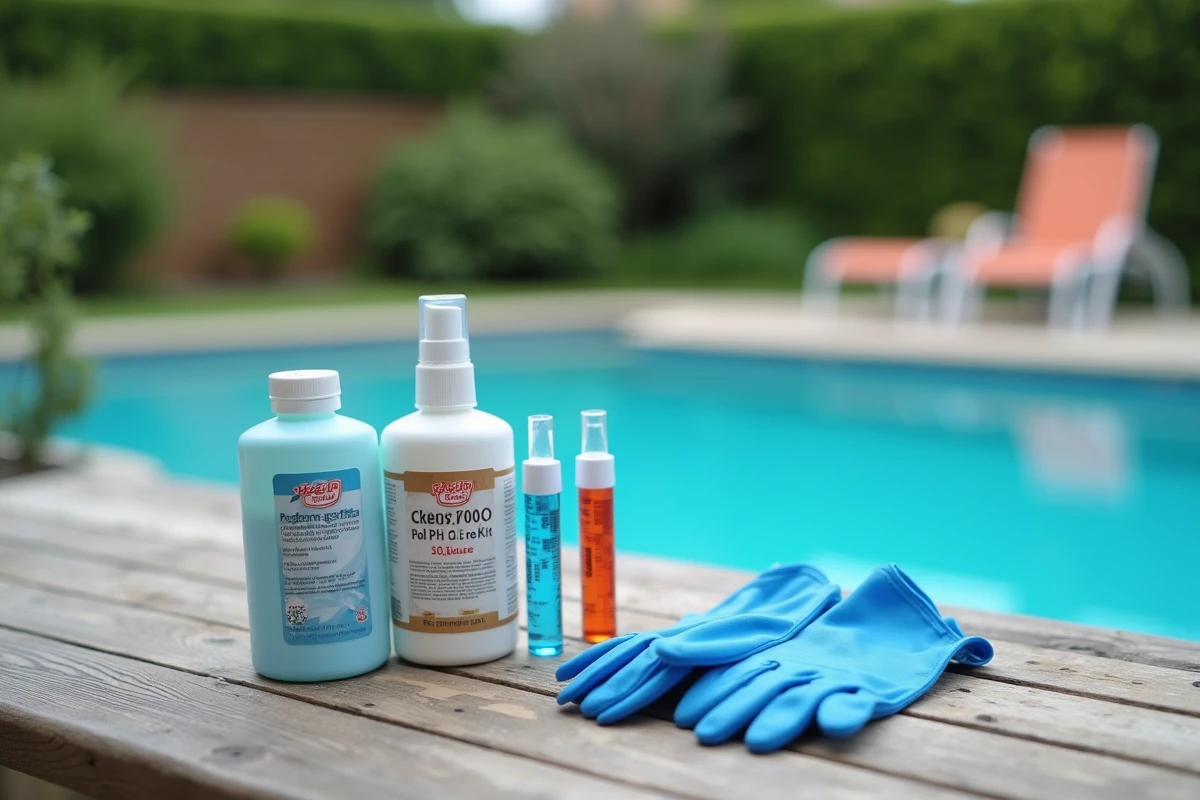
For sand or glass filters, the liquid flocculant can be used in circulation mode for about two hours, then the pump is turned off to allow the clumps to settle to the bottom. Vacuuming is then done in “drain” or “waste” mode to expel the deposits without sending them back into the filter. This method is more radical than the clarifier, but it involves a loss of water that will need to be compensated.
Common mistakes in dosing clarifier and chlorine
Overdosing the clarifier does not clarify faster. An excess of cationic polymer (the active ingredient in most clarifiers) can, on the contrary, cause additional cloudiness by forming a stable colloidal veil. The dosage indicated by the manufacturer is calibrated for a given volume. We recommend dosing based on the actual volume of the pool, not on an approximate estimate.
Another common mistake: adding clarifier to green water. Green water means an algae bloom. The clarifier has no algicidal action. First, the algae must be destroyed with shock chlorine, then filter intensively, and only then consider a clarifier for the fine residues.
- Never mix clarifier and flocculant in the same treatment, as their mechanisms oppose each other.
- Do not pour the clarifier into the skimmer if the circuit has a fragile diatomaceous earth filter; prefer a direct pour into the pool.
- Always check that the free chlorine level has dropped before adding the clarifier, or risk degrading the polymer.
The chlorine-clarifier combination works as a two-step protocol, not as a simultaneous mix. Chlorine oxidizes, the clarifier aggregates what chlorine has released. Respecting this order and maintaining filtration between each step remains the only reliable method to achieve clear water without multiplying unnecessary treatments.